Adventures with an environment-conscious inner-urban community
2019
For years we’d been tossing around options for increasing our solar performance without losing our high feed-in tariff (56c/kWh) for the 4.8kW PVs that were installed when the Christie Walk community built the Sturt Apartments in 2006.
But by 2019 it became clear that preserving the high feed-in tariff was a false economy. We’d be better off financially and environmentally if we replaced the PVs and inverters with a high performance 21kW system.
Adventures with an environment-conscious inner-urban community
May 2018
We started investigating the retrofit option for our hot water system: installing solar collectors as boosters to our existing heat pump hot water. One company stood out as a solid option: RunOnSun, based in the Northern Rivers region of NSW. Their website wouldn’t win a Webby Award for design, but the content is comprehensive and very educational. MD Andrew Butterworth has spent more than a decade applying Sydney University research on evacuated tube solar hot water and finessing it for efficiency and robust performance. The fixings supplied by RunOnSun are robust too; more than adequate to secure the system in cyclone conditions.
We decided to split the retrofit project into two stages. Stage 1 – 60 evacuated solar collector tubes – would be evaluated before moving onto Stage 2 – an additional 48 evacuated tubes.
Adventures with an environment-conscious inner-urban community
November 2017
I received an email inviting me to a meeting with the Carbon Neutral Adelaide team. They were scoping out a number of sites for selection as a possible “Carbon Neutral Showcase Site” and Christie Walk was on the list.
This was very exciting.
An important goal at Christie Walk is to act as a sustainability model, to demonstrate what’s possible, and to motivate others to take action. Close cooperation with Carbon Neutral Adelaide would enhance that outreach work.
Adventures with an environment-conscious inner-urban community
April 2016
Our apartment building (Sturt Apartments at Christie Walk) was nearly ten years old. It was time to start thinking about sustainability upgrades to reduce our carbon footprint.
Lighting was an easy place to start.
We worked with Adelaide lighting maintenance specialists Globebusters, who replaced unreliable CFL lights in our atrium stairwell and entranceway with long-life LED oyster lights and floodlights. In the courtyard, twin LED sensor floodlights replaced the old energy-hungry incandescent lights.
May 2016
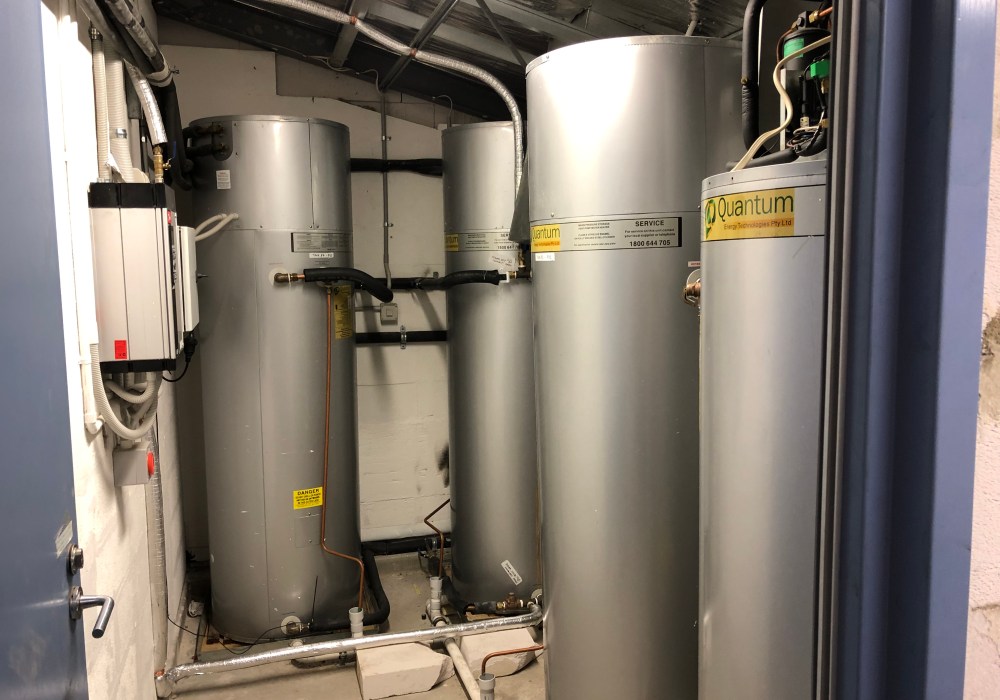
Hot water; one of life’s great privileges. But our little luxury comes at a cost for us, and a carbon-cost for our warming planet. It’s a particular issue in our 4-level block of 13 apartments.
Adventures with an environment-conscious inner-urban community
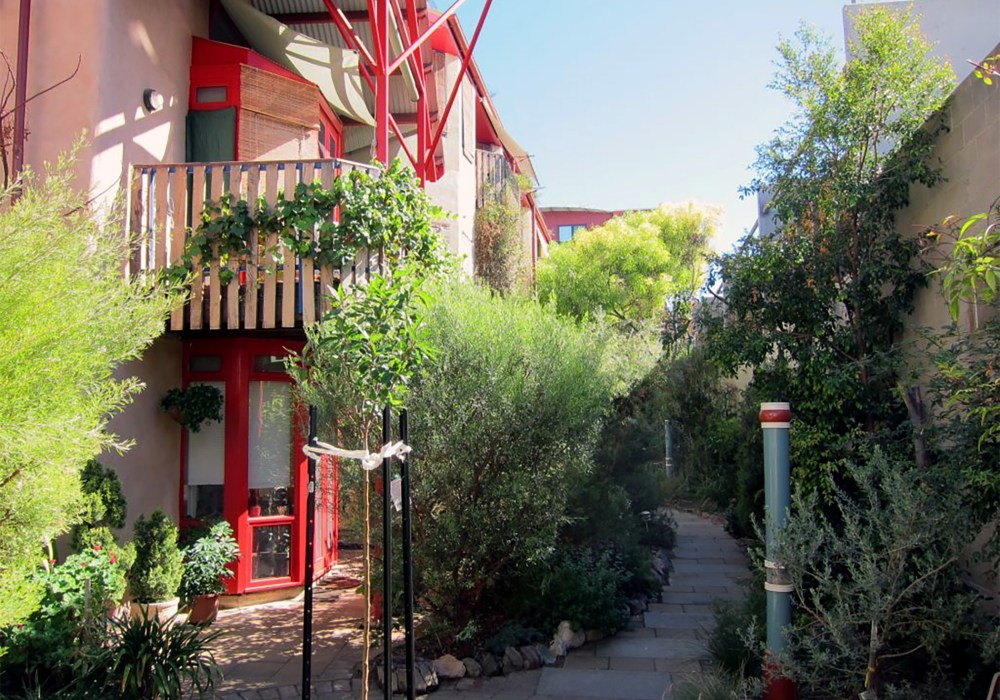
I’m fortunate to live at Christie Walk in Adelaide. It’s a community of 27 homes and gardens on 2,000m2. It was initiated by Urban Ecology Australia in 1999 as a demonstration project, to promote ecologically-sustainable and community-enhancing urban design and development.
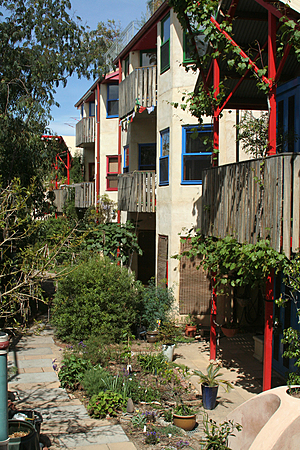
The buildings range from stand-alone straw-bale homes to a 4-level apartment block, all designed for comfortable high-density but low-energy living.
The facilitator asked us to do some dream-work. That’s normally not so hard, but there we were, standing in an awkward-shaped T-allotment strewn with bits of broken glass and featuring some derelict out-buildings. The site had previously been a city recycling depot and in a way one of our goals was to continue that recycling heritage. We were asked to dream of what the features would be for our ideal sustainable-living community on the site.
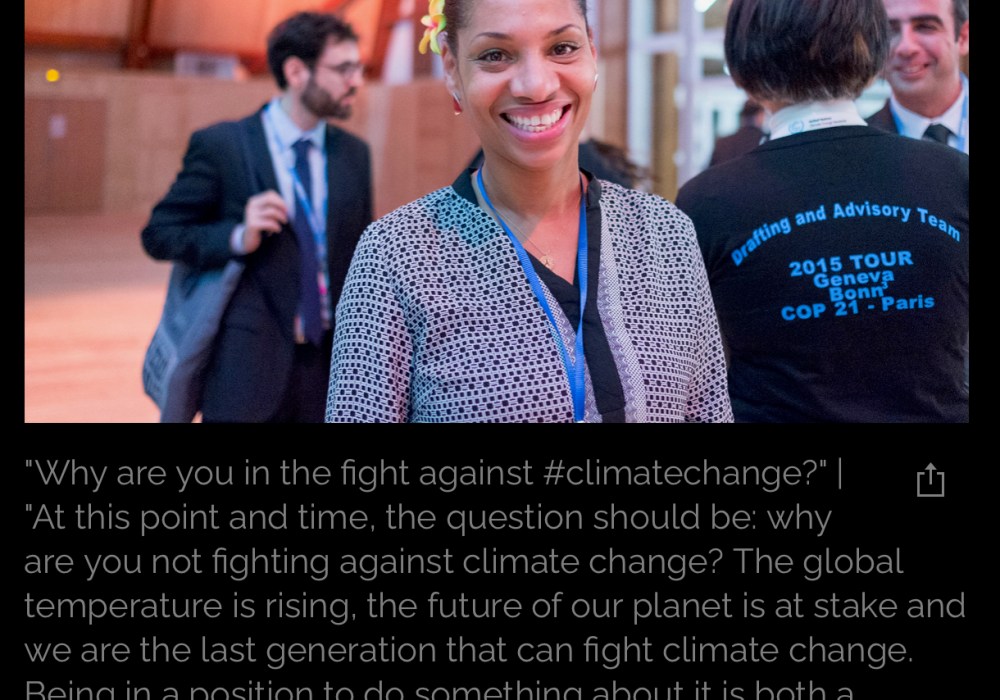
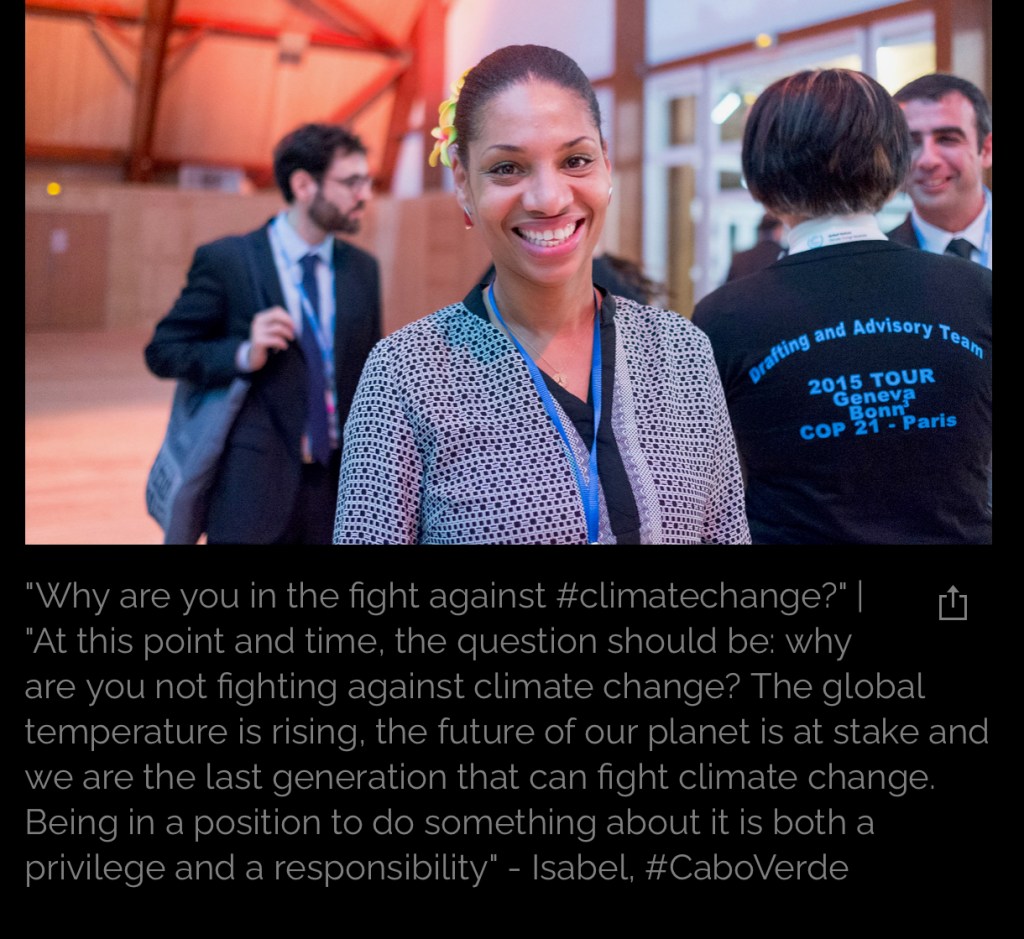
It’s so heartening to see the faces and words of negotiators from around the world – from local activists to Heads of State – as they explain to Kaveh their motivation to fight climate change.
So many people working so hard to salvage the future. That’s a ray of hope for sure.
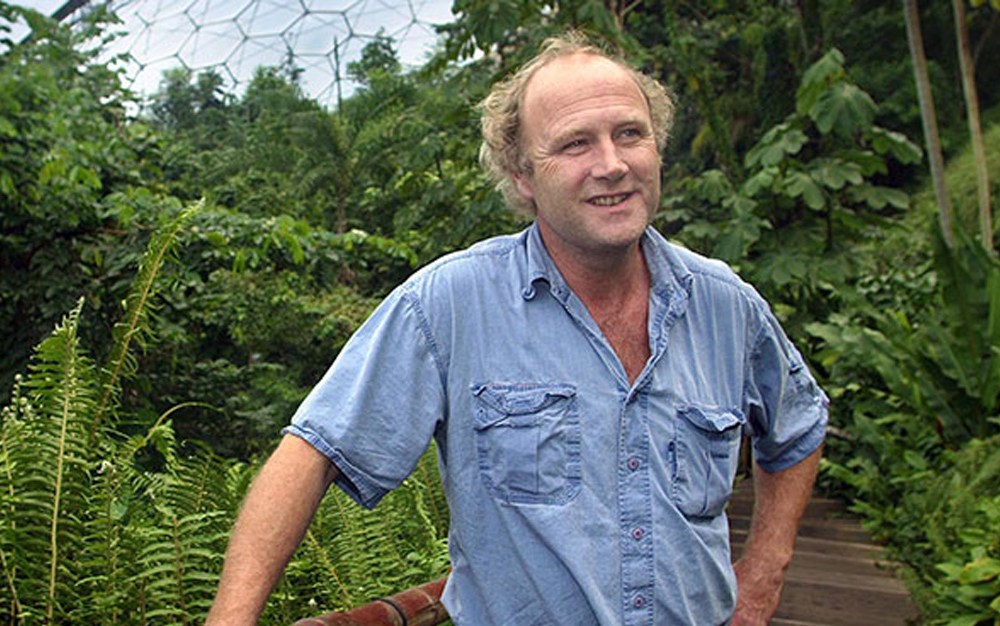
Today I had a chat with Sir Tim Smit, serial entrepreneur and co-founder of the Eden Project, ahead of his forthcoming presentation for the Planet Talks at WOMADelaide 2017.
In the prologue to his book, Eden, two sentences stand out, and they sum up the spirit of our chat: “Neither do I make any apology for being optimistic about the future. I am.”
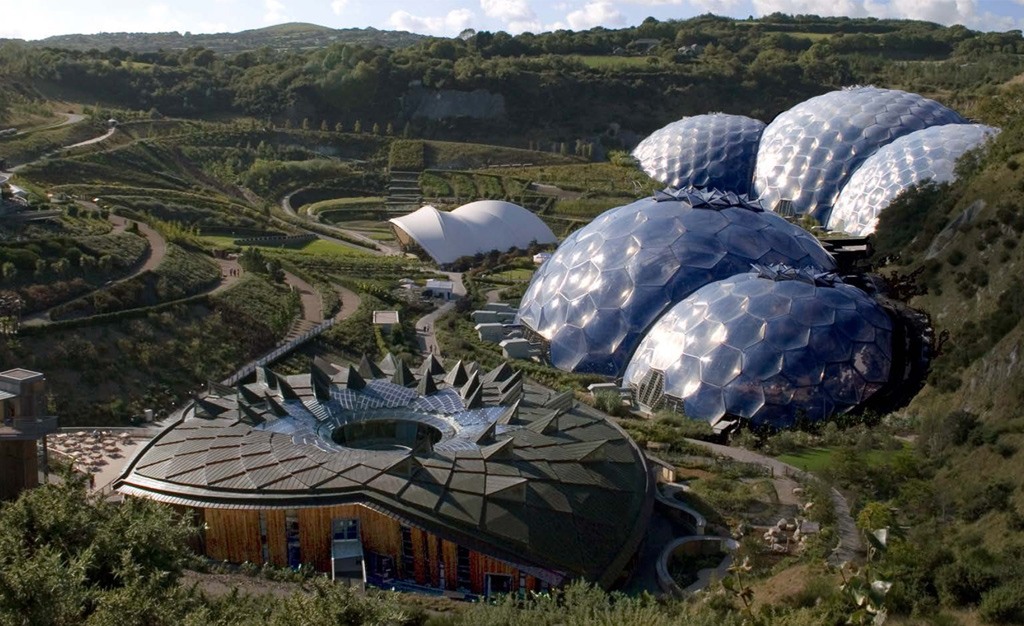
If ever there was a project that demanded relentless optimism, the Eden Project was it. “Tell him he’s dreamin’” must have seemed the realistic response to the notion of converting an exhausted clay pit into a beacon of hope that would attract millions of visitors to an ailing region of Cornwall. But the endless planning meetings and financing consultations, “persuading the boys in suits to take courage in the face of doubt”, paid off. The Eden Project – with its magnificent domed biome structures, clad with air-filled cushions – opened to the public in 2001. The Eden Project regenerated an abandoned mine into an iconic educational and community resource in six short years.
It wasn’t an easy ride. The site is 15 metres below the watertable and it rained every day during the first months of construction. Then there have been the legal battles over rights to intellectual property that have dragged on for more than a decade, culminating in the release of the book The Other Side of Eden in 2014. Inevitably there have been financial worries too, given the historic debt on a project costing in excess of £140million. In 2013 income from visitors to the site was about 85% of what was needed for sustainability. But more recent reports have recorded a turnaround and the Board has set a target of being substantially debt-free in the 2020 financial year.
Through all this Sir Tim – “call me Tim please” – remains undaunted. Within the first minute of my chat his sights were trained well above the Cornish horizon to a global overview. “How is it that in a time of unprecedented progress in science, we are surrounded by such gloom?” He argues that the last decade and a half of scientific breakthroughs are making the industrial revolution look like a small blip in history. He wonders if the domination of pessimism in the fourth and fifth estates is simply a reflection of the human fascination with our inevitable individual demise.
His challenge to the media is to bring people together, to highlight our shared goals and to provide the motivation for people to want to work together for a positive future for local communities.
“Eden aspires to infuse the belief that if everyone were to transform where they live into a place of beauty and hope, the world would be full of promise and the path to a sustainable future would be a little clearer.” – Edward Benthall, Chair of Trustees, the Eden Project
“Did you ever find that you were successful in changing someone’s opinion by yelling at them?” asks Tim. Perhaps in the past that’s been the dominant mode of the environmental movement and progressive media. If instead we focus on shared values, he argues, we’re more likely to have success in moving people along with us. If we surveyed Australians we’d find very few who would be happy if the Great Barrier Reef were to be destroyed. So in that shared cherishing of a healthy reef we find the kernel of regeneration for both optimism and activism.
So what does Tim Smit make of the more confrontational mode of one of my favourite approaches to environmental activism, the movement to make ecocide a crime, led by the indefatigable Polly Higgins? “I’m ambivalent”, he says. “It’s remarkable what progress has been made over the past few years, taking it from what seemed like a dreamer’s notion to something that might be achievable.”
But again he has a broader vision. When the Berlin Wall was torn down in 1989, he says we had a responsibility to offer something better. But we’ve been lazy, acting as if the corporate structures we’re working with were handed down on tablets of stone by Moses. What is needed is a fundamental change, such that each citizen is given one share in each corporation. Companies would then have to report not just on their financial results, but on how their annual activities have benefited the citizenry.
The Eden Sessions – the project’s one-day music festivals – have been an essential component of the success of the Eden Project. “It’s so important for us to come together in a beautiful environment to celebrate our common humanity and culture.” So it’s entirely fitting that Tim Smit’s main speaking engagement in Australia will be at WOMADelaide.
Knowing that in earlier years Tim Smit had worked as an archaeologist and then as a successful composer and music producer, I asked whether he had ever thought about throwing it all in and joining George Monbiot on the road playing music. “I have the highest regard for George Monbiot’s intellect, and his ability to think deeply about issues that the rest of us might skate over. But the important role for the likes of you and me is to take what he’s examined for us, and translate it into motivation for practical action.”
There was so much more I wanted to discuss with Tim Smit – the Eden Project learning centre that offers university degrees, but also has a strong focus on trade apprenticeships; the proposed deep geothermal power plant; the plans for Eden Projects in Quingdao, Hobart and Christchurch; but that will all have to wait for another time.
Sir Tim Smit is visiting Australia in March 2017 and will be appearing at WOMADelaide – The Planet Talks – 2pm Saturday 11th March – in conversation with Richard Fidler.
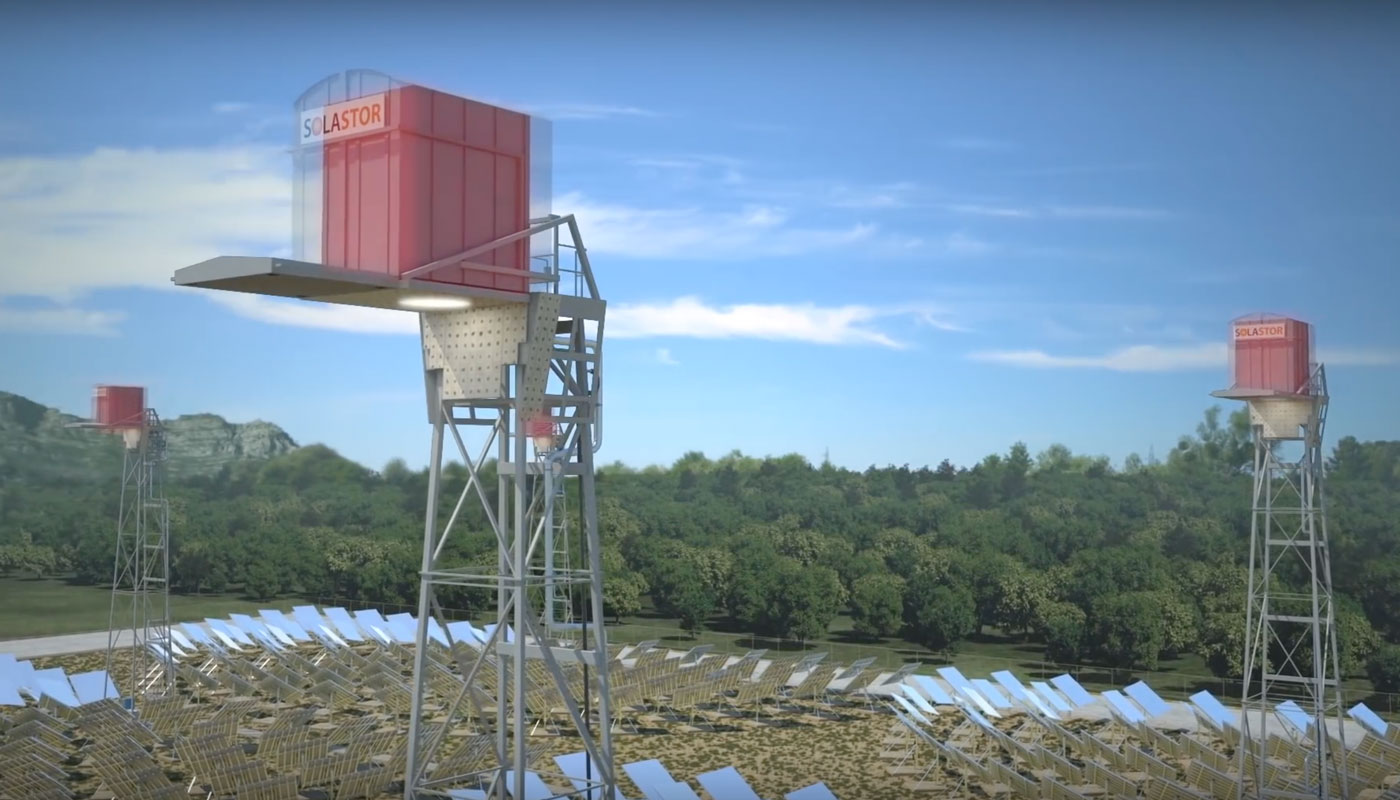
On 7th June 2016 another important step was taken towards decarbonising the South Australian economy. Solastor Australia announced detailed plans to build a solar thermal power station at Port Augusta.
In 2012 Dan Spencer reported for the New Internationalist: “In July this year – faced with the closure of the coal plants – a community vote was held by a local group called Repower Port Augusta asking residents whether they wanted solar thermal or gas to replace the town’s coal stations. Overwhelmingly the community voted 4053 to 43 for clean air, more jobs and the chance to see Port Augusta lead the country by building Australia’s first solar thermal power plants.”
Years passed and despite the enormous enthusiasm of the people of Port Augusta, and tireless activism, little physical progress was made.
After a long study, Alinta Energy announced in September 2015 that it wasn’t feasible for it to build a solar thermal plant to replace its coal-fired power stations. Closure had been expected some time between March 2016 and March 2018, but the end came quickly with the power stations shut down on May 9th 2016. South Australia lost a significant part of its baseload power-generating capacity without any commencement of building a replacement.
But despite that, the transition to a green economy is well underway in South Australia. 41% of the State’s electricity grid generation was powered by renewable energy in 2014/15. And the South Australian Low Carbon Economy Experts Panel reported to the South Australian Government in November 2015 that it is feasible for the State to reach net zero emissions by 2050.
So this week’s announcement from Solastor Australia is tremendously important, particularly because the company is promising prompt action. They plan to build a grid-connected pilot plant at Port Augusta by the end of 2016, using scalable technology. The 1MW demonstration solar thermal power station will have several collector towers, each holding a 10 tonne block of graphite that can store the heat from the toroidal reflector mirrors for up to a week. Water circulating through tubing embedded in the graphite is converted to steam which then drives a turbine generator.
The full-scale grid-connected power station will have 1,700 collector tower modules and is expected to generate 110MW in winter and 170MW in summer.
Solastor envisages that this will be the first of many similar baseload solar thermal plants.
Once in a lifetime a truly game-changing event reshapes global society. Think back to 1833 when the British Parliament finally bowed to public pressure and the Slavery Abolition Act was passed. Now in our lifetime Polly Higgins is campaigning tirelessly to do for Earth Rights what the abolitionists did for Human Rights. And the goal is in sight.
I spoke to Polly Higgins this week for an update.
Brian: We’re always fascinated to know what motivates people; what got you started on a lifetime of activism? Polly: In my student days I met the Austrian artist and ecologist Hundertwasser. He was a big part of my life then. I went to Austria specifically to seek him out for an interview for my Masters thesis. He was an ecological thinker so much ahead of his time. He talked about things such as: trees have rights; nature has no straight lines, so neither should our architecture.
Brian: But how do you think he would view the idea of a global law for the Earth? After all he was even opposed to the European Union, let alone global legal frameworks. Polly: That’s true. But he nevertheless had an expansive view of nature and the need to protect the earth. His main concern there was with the tendency towards a homogenised culture; he was eager to celebrate the higher innate wisdom found in indigenous culture.
Watch Polly Higgins – TEDx Exeter
Brian: Ten years ago you were a regular lawyer appearing in the British court system, but that’s all changed. Why is that? Polly: In 2005 I was a barrister in the UK courts representing a man who had suffered a serious workplace injury. There was a moment of silence while we were waiting for the judges, and I looked out the window and thought “the earth has been badly injured and harmed too, and something needs to be done about that”. My next thought actually changed my life, “the earth needs a good lawyer too”. When I looked around for the tools that I could use to defend the earth in court, I realised those tools didn’t actually exist. But what if the earth had rights like we as humans have rights? International laws that criminalise genocide are now accepted as a valuable tool. Why couldn’t we also criminalise ecocide?
Brian: Are there any existing laws against ecocide? Polly: Vietnam suffered very badly with environmental devastation during the war years, so they introduced ecocide into their domestic law in 1990. The USSR had also incorporated ecocide provisions, so following the collapse of the USSR many of the newly independent nations maintained the provisions against ecocide. But ecological destruction crosses national boundaries, and is often caused by transnational corporations, so an international legal framework is needed.
Brian: During your research you found that the United Nations had been considering introducing a crime against nature for decades. What went wrong? Polly: In the leadup to the adoption of the Rome Statute which led to the establishment of the International Criminal Court, there were to be five core international crimes: genocide, crimes against humanity, war crimes, crimes of aggression and ecocide. But last-minute lobbying – particularly by the US, UK, Netherlands and France – saw ecocide dropped from the Statute.
Brian: So what hope is there of ecocide being reintroduced? Polly: The Rome Statute can be reviewed in 2015, so right now is an important opportunity for the campaign to have the Statute amended. So far 122 nations – including Australia – are signatories to the Rome Statute. All it would take now to move the proposal forward is for one head of state to sponsor tabling of the draft legislation. There could then be a five year transitional period and the law could be fully operational by 2020.
Brian: Critics of the ecocide campaign have argued that in the case of the greatest environmental challenge that we face – climate change – there is no single perpetrator to be readily identified. Wouldn’t we all be criminalised in that case? Polly: That’s the beauty of the ecocide provisions. The law doesn’t have to accept the theory of human-induced climate change. Instead it looks at it holistically. Climate change is a symptom of damage to our ecosystems. The important thing is to put in place criminal law that leads to the abatement of dangerous industrial activity. And that’s where the ecocide provision is a game-changer. Prosecution for environmental damage under current national environmental law simply results in a fine, and corporations build that into their budgets. But with ecocide as a law enforced by the International Criminal Court, that would all be vastly different. The principle is known as “superior responsibility” – those who are at the top who make decisions are held to account in a criminal court of law. That includes corporate CEOs, heads of state, regional premiers and heads of financial institutions.
Brian: You see this as being a game-changer, and that there would be a dramatic improvement in environmental stewardship. But corporations have huge teams of fancy lawyers too. Are you confident that cases brought to court could be won? Or are you assuming that the deterrent effect alone would be sufficient? Polly: What is crucial here is that there is a test that has to be met – a test that can be examined in court for prosecution purposes. This is a crucial difference between civil and criminal law – it’s not a matter of fancy lawyers, it’s a matter of evidence being brought. It’s far harder to deny ecocide in the face of data, visual evidence and research that demonstrates an ecocide than, say, a crime of theft.
Brian: Some people see you as anti-development. Polly: That’s not at all the case. My goal is simply to provide a legal framework that enables corporate CEOs to become part of the team that protects our ecosystems. Currently the over-riding legal requirement for corporations is to maximise profits for shareholders. There comes a point when we say ‘this must stop’ – enough tipping points have been reached. Destroying the earth doesn’t work for humans, nature or corporations.
Polly Higgins at WOMADelaide 2014
Brian: Are any retrospective provisions included in the draft law? Polly: No – retrospectivity is not just. What is important is to give space for companies to turn around and be given the opportunity to have all the assistance they require to enable them to do so. That is why I propose a five year transition period.
Brian: So what’s to be done about people who are already suffering the effects of previous ecocide? Polly: There is a second type of ecocide defined in my proposed amendment that is equally important and very powerful – imputing a legal duty of care for naturally occurring ecocide. Island nations and countries like Bangladesh are being severely threatened by rising sea levels and intensifying storms. But when they appeal to the international community for help, they can be more or less ignored: “it’s not our responsibility”. But the ecocide provision create a legal duty of care for the international community to give assistance.
Brian: Thank you Polly. Our editor Dinyar, who interviewed you for the New Internationalist magazine in 2010, describes you as “the most indefatigable campaigner” and for that we’re eternally grateful.
Polly Higgins is visiting Australia in March 2014 and will be speaking at:





 BrianLoffler