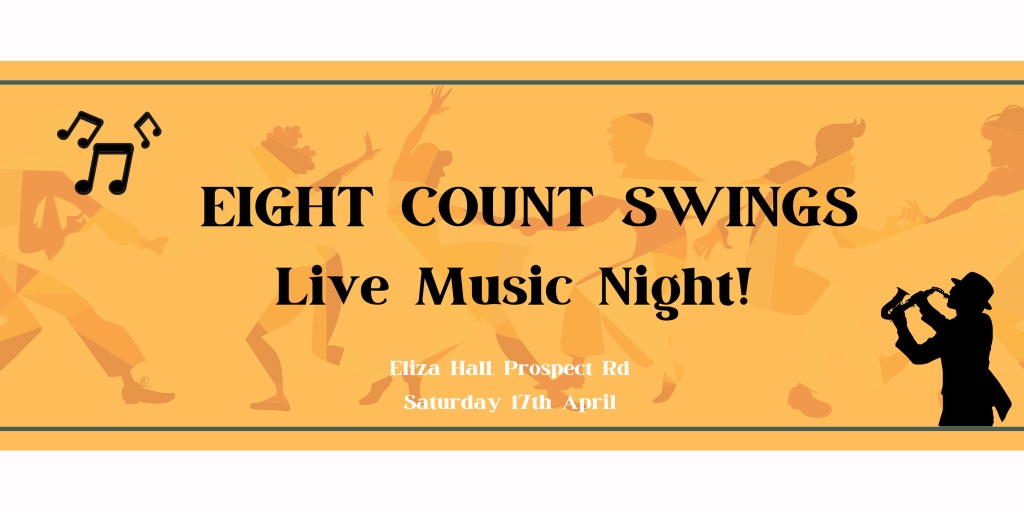
If you don’t know the difference between Lindy Hop, Charleston and Shag Dance, well neither do I TBH. But I’m gradually learning a little since one of the jazz bands I play with – Chicos Swing Combo – has been doing gigs for 8-Count.
Their next swing dance event is on Saturday night (April 17th, 2021). Details here.
It’s a blast to play for these shows; I’ve never seen such enthusiasm to get on the dance floor. So much so that between the band’s two sets, they turn on a dance DJ so the Eight Count crowd can just keep on dancing and having a ball. Though the typical age group seems to be 20 to 40s, there are people of all ages and abilities. There’s usually a dance teaching segment or two as well, sometimes aimed at beginners and sometimes for advanced swing steps.
WOMADelaide 2021 opening night was an emotionally-charged event with Archie Roach and Lior fulfilling in style the WOMADelaide goals of celebrating cultural and creative diversity.
The stage is set for the Lior/Westlake performance of the Compassion song-cycle. Photo: Brian Loffler
Archie Roach came on stage for his 7th and final WOMADelaide show – more repeat performances at WOMADelaide than any other artist – and the crowd responded with a standing ovation before he’d sung a note.
In July 2008 I booked a ticket to San Francisco. I was double bass player for Gail Kingston’s Hot Foot Jazz and we were making plans to appear at the Sacramento Jazz Jubilee in May 2009.
This was a big deal for us. The band was in peak form; we’d just completed a new CD “Can You Tame Wild Wimmen” and Gail was hot favourite as we toured to jazz festivals across south-eastern Australia.
Gail Kingston’s Hot Foot Jazz at Tooleybuc NSW, June 2008. Brian Loffler (double bass), Derek Dalton (trumpet), Ron Bash (reeds), Gordon Coulson (trombone), Harold Phillis (piano), Dave Sutton (drums), Gail Kingston (leader, vocals), Tony West (banjo)
Exposure in the US would be a breakthrough; we’d tighten up our stagecraft and have a chance to mix it with some of the best traditional jazz musicians from around the world.
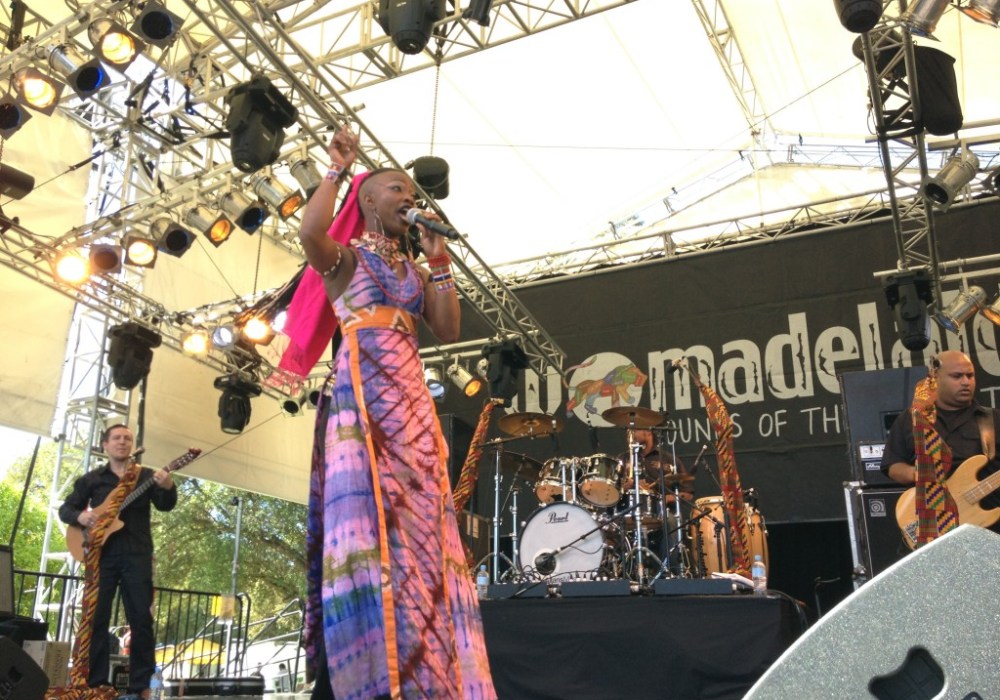
I had a chat with Fatoumata Diawara ahead of her appearance at WOMADelaide 2019.
Brian: First of all, many congratulations on your nomination for this year’s Grammy Awards for your album Fenfo. Will you be attending the Awards Ceremony?
Fatou: Yes, I’m going to go, definitely. Last year it was the Victoires de la Musique in France, so I’m familiar with the significance of the ceremonies.
Ahead of his appearance at WOMADelaide 2018, I spoke with Chilean singer, multi-instrumentalist and song-writer Nano Stern about cultural heritage, his hopes for the future and the incomparable instrument, the human voice.
Brian: It’s been six years since we last saw you perform at WOMADelaide, and eight years since your Live in Concert album was recorded in Mullumbimby. What are the main changes we can expect at WOMADelaide 2018? Different instruments and band line-up? More influence of rock and jazz or stronger influence of Chilean roots since your return to live in Santiago?
Have you been to the Riverland lately? Here are 5 good reasons to plan a weekend away at Loxton in April.
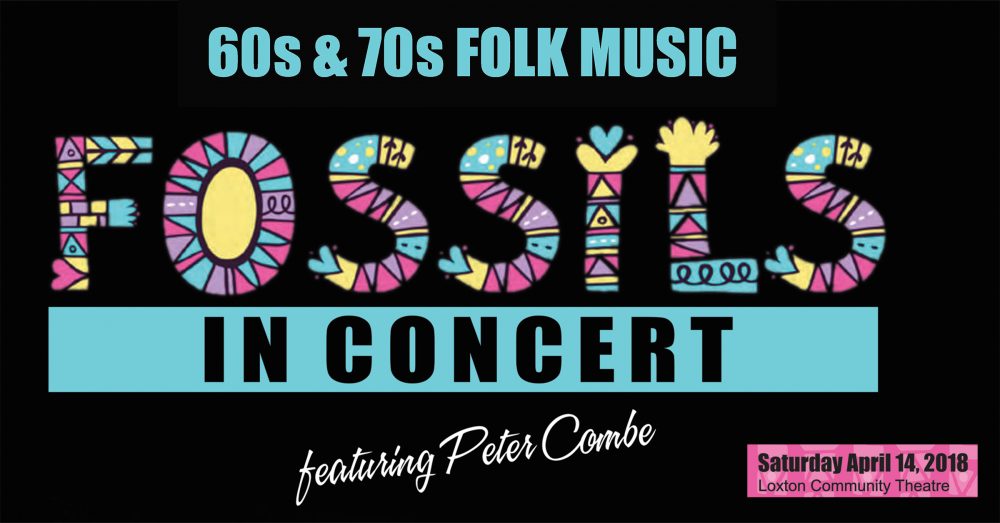
1. Join us for this special one-night-only event in historic Loxton. Fossils will bring to life for you the best folk songs of the 60s, 70s and later, many made famous by the wonderful Peter, Paul and Mary and Bob Dylan.
The Royal Flying Doctor Service is the health lifeline for thousands of rural people. Have a great night out on Saturday 14th April 2018 and help us raise money for this essential service.
We’ve had a lot of fun presenting our three Fossils benefit concerts in 2015, 2016 and 2017 for Lutheran Community Care’s social welfare programs. And it’s very satisfying that the September 2017 concert raised another $7,500, bringing the total for the three concerts to $20,000.
We’re very grateful for all the support we’ve received from fans of 60s and 70s folk music, as we’ve brought back to life those powerful lyrics, memorable melodies and and superb harmonies from the likes of Peter, Paul and Mary and Bob Dylan.
For the 2017 Concert, LCCare prepared a flyer that gives an insight into what has motivated our Fossils team to create our tribute band. You can download the flyer by clicking here.
Remember the coffee lounges of the 60s and 70s, and hearing the songs of Peter, Paul & Mary or Bob Dylan? Their music was such a powerful symbol of love and peace, bringing a message of humanity, hope and activism.
It was an age of powerful lyrics, unforgettable melodies and superb harmonies.
We formed Fossils Folk group in 2014 to revive this popular folk music of the 60s and 70s.
Our first major gig was a benefit concert in November 2015. Initially we were planning a quite intimate acoustic show for around 50, but in the end more than 250 tickets were sold and we had a wonderful evening sharing our love of so many superb songs with a very happy crowd. Read More
At WOMADelaide’s Planet Talks, Vandana Shiva, Paul Sutton and Tim Jarvis will be challenging the values that we place on our land, food and water, and what these values mean for the health of our planet and ourselves.
I spoke to Dr Vandana Shiva about seeds and freedom.
Brian: You could have been a well-paid physicist, living in style in Mumbai. What first inspired you to focus on environmental activism instead? Vandana: Even while doing physics I had got involved as a volunteer in the Chipko movement that stopped logging in my home region in the Himalaya. In 1982 the Ministry of Environment asked me to assess the impact of mining in Doon Valley. The study led to a Supreme Court case and the mines were shut down. I realized then that I could contribute much more outside formal research systems, and started the Research Foundation for Science Technology and Ecology. In 1984, as a consequence of the Bhopal disaster and Punjab violence, I undertook a study for the United Nations University which was published as a book The Violence of the Green Revolution. In 1987 I was invited to attend a conference on Biotechnology, and hearing the agrochemical corporations talk about how they needed to do genetic engineering to claim patents, and how they were working on an international Intellectual Property Treaty in the GATT – which became the WTO – I made a commitment to save seeds, and build movements on Globalization, patents on seeds, and GMOs.
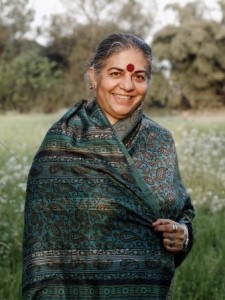
Vandana Shiva
Brian: You’ve written that quantum theory taught you guiding principles for your life’s work? How so? Vandana: The quantum principles that have guided my life’s work are non-separability – separateness is not the nature of reality; the world is interconnected. Potential – potential is the nature of reality, not fixed and immutable particles. Everything has potential to evolve. Indeterminacy – because the world is not made of fixed determinate quantities and things, but is a fluid enfolding and unfolding of potential, indeterminateness and uncertainty. Uncertainty – is the nature of being. No excluded middle, no either or.
Brian: You’ve said that “in the soil are the answers to the problem that oil has created”. What is your top priority in the Year of Soils? Vandana: My priority in the Year of Soils is to create awareness about – and love and reverence for – the living soil that supports and sustains us. We have started working on a Manifesto on Soil that will be released at the Expo in Milan which is dedicated to feeding the world. We are preparing a film of Living Soil. In September we will offer a course on A-Z of Agroecology dedicated to training in living soil and living seed. On 1st October we will organize a festival dedicated to the Soil. And from 2nd October to 5th October we will organize a Soil pilgrimage. Hope your readers can join.
Brian: Why is “Seed Freedom” so important to you? Vandana: Seed is the first link in the food chain. In seed is embodied millions of years of evolution, and thousands of years of breeding by our ancestors. In seed lies the future potential of agriculture. Seed freedom has become the most significant commitment of my life because of the threat of genetic engineering, the imposition of patent laws and seed laws that are trying to make seed saving illegal in order to establish a corporate monopoly on seed. In India, high costs of seed and chemicals have pushed farmers into a debt trap. More than 291,000 indebted farmers have committed suicide. When farmers have their own seed, they have no debt. For the freedom of seed, of biodiversity, of farmers, of citizens, we all need to be engaged in Seed Freedom.
Brian: Contamination of organic crops by GMOs from neighbouring farms is a serious concern. What can be done? Vandana: Genetic pollution of organic farms by GMOs is a new form of pollution. Environmental laws recognize that polluters must pay. In the case of GMOs corporations like Monsanto – which define seed as their intellectual property – should pay. UN Biosafety laws have a liability protocol. This should be implemented by every country.
Brian: What is your attitude to “corporate personhood” – granting corporations the status of legal “persons”? Vandana: When corporations claim personhood, they rob citizens of their personhood. When citizens of Vermont were successful in having a labelling law passed, corporations sued Vermont on grounds of their “personhood”. They have tried to argue that citizens knowing what is in their food, and making choices on the basis of that information is taking away the “Free Speech” of the corporate person. The Investor State Dispute Settlement clauses in the New Free Trade treaties such as TPP and TIPP are in fact clauses of corporate personhood through which corporations want to have rights to sue governments that act in the public good on the basis of democracy. The rise of corporate personhood is the death of democracy, the death of sovereignty, the death of human rights, the end of freedom. We cannot allow this fiction to become the basis of governance.
Brian: Food security is a focus for you. But you also stress the importance of organic production in non-food crops such as cotton. Why is that? Vandana: I have witnessed cotton farmers getting trapped in debt as a monopoly of Bt cotton was established. The highest number of suicides are in the cotton belt. We have carried out research on soil and found beneficial organisms killed with Bt cotton. We are doing a study on pollinators. There are no pollinators in Bt cotton fields. To protect our ecosystems, our biodiversity, our soil, our farmers we must promote organic cotton. Farmers using native cotton seeds from Navdanya seed banks and practicing organic production are getting double the yield and up to ten times higher incomes. They are also growing organic food crops and organic kitchen gardens we call Gardens of Hope. Since the organic cotton project has freed farmers from debt, we call it Fibres of Freedom.
Brian: Thank you so much Vandana. We very much look forward to hearing more from you at WOMADelaide.
Vandana Shiva is visiting Australia in March 2015 and will be speaking at:
I have a confession. Each year when I look at the WOMADelaide program and study the list of artists I draw a blank. Well, not quite a blank. There are always a few celebrities – the likes of Baaba Maal and Lo’jo who make welcome return visits.
But each year I head to WOMADelaide confident that these will be the best four days of the year for music, culture and dance, as the artists whose names mean little to me, then burst onto the stage; so colourful, so rich a mix of traditional and modern culture.




 BrianLoffler